

Introduction
The FTC Tech Antitrust News Today has shaken the U.S. technology market in a big way. The Federal Trade Commission is no longer sending warnings. It is acting. Regulators now believe some tech giants have grown too powerful and too comfortable. This article explains what is happening, why it matters, and how it affects you. You will see how Federal Trade Commission tech news is changing business behavior, consumer choice, and innovation across America.
The latest crackdown is not sudden. It is the result of years of complaints, research, and public pressure. According to Breaking news from the FTC newsroom today, regulators want fair competition back on the table. This move fits into Government oversight on tech companies and stronger FTC enforcement actions aimed at restoring balance in digital markets.
Overview of Today’s FTC Antitrust Action
Today’s action by the FTC marks a turning point in FTC legal updates. The commission has launched aggressive legal steps against dominant tech platforms. These steps focus on unfair competition, forced acquisitions, and data control. The goal is simple. Stop monopolistic behavior before it damages the market beyond repair.
This decision aligns with Regulatory news on tech monopolies and reflects lessons learned from Recent antitrust rulings. The FTC believes delay equals damage. That belief explains the urgency behind this move and why news about the FTC’s Consumer Protection efforts is driving the conversation nationwide.
Which Big Tech Companies Are Targeted?
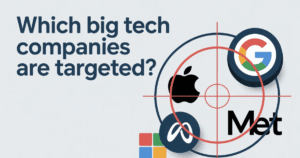
Several household-name tech companies now face serious scrutiny. These firms dominate search, social media, online shopping, and mobile ecosystems. According to Current FTC investigations into tech companies, the focus is on companies that control user data, advertising markets, and app distribution.
This is not guesswork. FTC press releases and announcements confirm multiple probes. These cases build on earlier Big Tech legal actions in 2021 and form a broader overview of Tech company lawsuits that could reshape the industry.
Big Tech Companies & FTC Focus Areas
| Big Tech Company | FTC Concern Area | Reason for Investigation |
|---|---|---|
| Search & Ads Monopoly | Search dominance and ad pricing control | |
| Meta (Facebook) | Social Media & Data | User data misuse and market control |
| Amazon | E-commerce Practices | Seller suppression and self-preferencing |
| Apple | App Store Policies | Forced commissions and restricted competition |
Reasons Behind the Latest Crackdown
The FTC believes competition is shrinking. New startups struggle to survive. Innovation slows when one company controls the gate. This is why FTC regulations on monopolies are now stricter and louder than before.
Another key reason is consumer harm. Higher prices, fewer choices, and limited privacy options matter. These concerns appear repeatedly in the analysis of FTC antitrust lawsuits in 2021 and in ongoing Technology sector compliance cases.
Historical Context of FTC Antitrust Enforcement
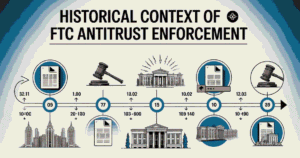
The FTC has a long history of intervention. US antitrust law cases in 2021 showed regulators testing stronger legal tools. Some worked. Others failed. Each case refined the strategy.
Those lessons now fuel Detailed FTC decisions on antitrust regulations. Regulators are no longer experimenting. They are executing.
Key Allegations and Legal Points
The allegations center on market abuse. The FTC claims some companies block competitors, buy rivals to kill innovation, and misuse user data. These claims follow the FTC legal complaints procedure step by step.
Legal arguments rely on precedent and economic harm models. FTC antitrust lawsuits, often explained for entrepreneurs, stress that dominance alone is not illegal. Abuse of dominance is. That distinction defines today’s lawsuits.
Immediate Impacts on Big Tech Operations
Operations are already changing. Some companies paused acquisitions. Others adjusted algorithms and data policies. These actions reflect fear of stronger penalties under FTC actions against big tech companies in 2021.
Below is a snapshot of immediate operational effects:
These shifts align with the FTC’s top decisions affecting the tech industry and signal long-term change.
Short-Term vs Long-Term Impact of FTC Crackdown
| Impact Type | Short-Term Effects | Long-Term Effects |
|---|---|---|
| Business Operations | Delayed mergers, legal reviews | Structural business changes |
| Consumers | Minor service changes | More choices and fair pricing |
| Tech Industry | Market uncertainty | Stronger competition |
| Innovation | Slower rollouts | Healthier innovation ecosystem |
How Consumers Could Be Affected
Consumers may benefit first. More choice. Clearer pricing. Better privacy. That is the promise behind the FTC’s consumer protection news.
However, transitions take time. Some services may change or disappear. According to Current news and updates on FTC lawsuits, short-term disruption could lead to long-term fairness.
Reactions from Industry Leaders and Analysts

Industry leaders are divided. Some warn that regulation will slow innovation. Others admit reform is overdue. Analysts quoted in Latest updates from the FTC newsroom 2021 say balance is key.
One antitrust expert stated, “Competition fuels creativity. Regulation restores competition.” This view appears often in the Comprehensive Review of the FTC’s recent cases.
Potential Legal Challenges and Court Battles
Court fights are inevitable. Big Tech has deep legal resources. Expect delays and appeals. These tactics already appeared in How the FTC is handling tech antitrust lawsuits.
Still, courts are evolving. Judges now understand digital markets better. That shift strengthens the FTC’s 2021 cases in the technology sector and raises the FTC’s chances of success.
Broader Implications for the Tech Industry
The ripple effect is massive. Startups may finally compete fairly. Investors may rethink dominance-driven valuations. This fits the pattern seen in Technology sector compliance cases.
Global regulators are watching too. U.S. action often sets international tone. That is why Regulatory news on tech monopolies now travels fast worldwide.
What This Means for the Future of Innovation
Innovation thrives on open markets. If the FTC succeeds, smaller companies gain oxygen. Consumers gain variety. That is the long-term vision behind the Latest FTC tech antitrust news updates 2021.
The risk exists. Overregulation can stall progress. The challenge is balance. That balance defines how to track FTC complaints and resolutions, and how to design future policy.
Conclusion: The Long-Term Effects of the FTC Crackdown on Big Tech
The FTC Tech Antitrust News Today is not noise. It is a signal. Big Tech must adapt or fight. Consumers should stay informed. Entrepreneurs should pay attention.
This crackdown could redefine digital power in America. If successful, it restores trust and fairness. If not, it still reshapes debate. Either way, today’s FTC legal updates will continue to shape the tech future you live in every day.
Faq’s
Does the FTC deal with antitrust?
Yes, the FTC actively enforces U.S. antitrust laws to prevent monopolies and unfair competition.
It focuses on protecting consumers and keeping markets open and competitive.
What is the latest news about technology?
The newest technology news highlights stronger FTC action against Big Tech monopolies.
These moves focus on competition, data control, and consumer protection in digital markets.
Is the FTC investigating Microsoft over antitrust concerns?
Yes, the FTC has increased scrutiny of Microsoft, especially around major acquisitions.
The focus is on whether these deals reduce competition in gaming and cloud services.
Which big tech firms are facing increasing antitrust scrutiny?
Companies like Google, Amazon, Meta, Apple, and Microsoft are facing increasing scrutiny from the FTC.
Regulators are examining market dominance, data practices, and anti-competitive behavior.
