

Brand name normalization rules play a crucial role in creating a clean, consistent, and professional brand identity. Many companies struggle with cross-department brand naming alignment, causing confusion and weakening recognition. Following best practices for brand name consistency ensures that every customer interaction, from websites to social media, reflects a unified image. Effective normalization strengthens internal communication through standardized branding,
Enhances consistent branding for customer recognition, and boosts online visibility. By mastering these rules, businesses can build trust, improve leadership decisions, and maintain a recognizable presence across all platforms. Strong brand name normalization is essential for lasting success.
What is Brand Name Normalization?
Brand name normalization is the process of standardizing a company’s name across all platforms and systems. It ensures that variations, abbreviations, or formatting differences are mapped to one canonical brand name. This approach helps in aligning parent and sub-brand naming conventions, maintaining clarity, and boosting visibility online. It is essential for companies that want to achieve consistent branding for customer recognition.
Normalization also improves internal efficiency. Internal communication through standardized branding ensures that teams across marketing, sales, and customer service use the same terminology. This prevents confusion, reduces errors, and strengthens the brand’s professional image. It is especially critical for companies operating in multiple states or regions in the USA.
Defining canonical brand names
A canonical brand name is the official, standardised version of a brand name used in all communications. It serves as the reference point for all variations, including abbreviations, acronyms, and sub-brands. Having a canonical name ensures cross-department brand naming alignment, improves SEO, and provides consistency across online and offline channels.
The difference between normalization, standardization, and data cleaning
Normalization is different from data cleaning or standardization. While cleaning removes errors and duplicates, normalization creates one uniform name for multiple variations. Standardization ensures formatting rules are followed, but normalization ties all variations to a single canonical identity. Together, they support global brand identity management strategies and maintain strong recognition across platforms.
Why Brand Name Normalization Matters
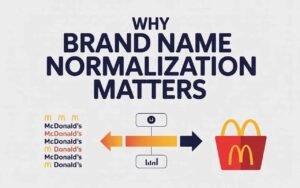
A consistent brand name has a direct impact on business credibility. Companies with inconsistent brand names often struggle with customer confusion and reduced loyalty. The impact of inconsistent brand names on trust is significant because consumers may question the professionalism or reliability of a business that cannot maintain a uniform identity.
Improving SEO with brand name consistency is another benefit. Search engines favor brands that use their name uniformly across websites, social media, and directories. This helps businesses rank higher in search results, increasing visibility and traffic. Ways in which inconsistent branding affects customer trust are clear: confusion leads to missed opportunities and weaker relationships.
Business impacts of inconsistent brand names
Inconsistent branding can lead to lost sales, weaker market recognition, and misaligned internal messaging. When employees or partners use different names for the same brand, operational inefficiencies arise. How Brand Normalisation Improves Internal Communication ensures teams have a shared language, improving workflow and customer support.
Effects on leadership reporting and decision-making
Leadership relies on accurate data to make strategic decisions. Inconsistent names can distort reports, analytics, and performance metrics. Using brand name formatting and punctuation rules and steps to standardize brand names in a company allows executives to trust their data and make informed choices.
Influence on customer experience and brand perception
A strong, consistent brand improves trust and recognition. Customers remember brands that are easy to identify and interact with across channels. Ways to maintain a coherent brand identity online include consistent logos, names, and messaging. This consistency creates a professional and reliable impression in the USA market.
Common Challenges in Brand Name Normalization
Many organizations struggle with common challenges in brand name normalization. Legacy systems, cross-department variations, and multiple sub-brands can make standardization difficult. Resistance from employees or teams used to informal naming conventions can slow adoption.
Legal requirements and trademark rules further complicate the process. Companies must ensure that their normalized names follow legal considerations in brand name standardization while remaining clear and user-friendly. Without planning, attempts to normalize names may fail or cause confusion.
Handling legal suffixes and corporate identifiers
Standardizing names like “LLC” or “Inc.” is critical for compliance and clarity. Tips for handling legal suffixes and trademarks in branding include creating a master reference list and ensuring every document and online mention adheres to these rules.
Managing symbols, trademarks, and special characters
Symbols like ™, ®, &, or @ can appear inconsistently in brand names. Proper normalization ensures these are handled correctly, improving recognition and avoiding legal issues.
Dealing with abbreviations, acronyms, and parent/sub-brand relationships
Sub-brands and abbreviations often confuse consumers and employees. Mapping all variations to a canonical brand name ensures alignment. Creating a recognizable brand through consistent naming helps maintain professionalism and clarity across all touchpoints.
Language and localization hurdles
For US companies with international operations, variations in spelling or regional adaptations create challenges. Normalization ensures the brand remains clear and coherent in multiple languages, improving global perception.
Legacy data and cross-system inconsistencies
Old databases and multiple CRM systems often contain conflicting brand names. Regular audits and methods for tracking brand name usage over time help maintain uniformity and prevent errors.
Guidelines for Standardizing Brand Names
Effective normalization requires clear rules and processes. First, define capitalization, punctuation, and spacing rules. Consistent formatting improves SEO and brand recognition, creating a strong professional image.
Brand name style guide creation tips include documenting all variations, outlining usage rules, and providing examples. A strong style guide ensures cross-department brand naming alignment and helps teams maintain consistent messaging.
Capitalization and formatting standards
Decide on whether to use title case, all caps, or lowercase. Ensure every instance follows the corporate branding standardization guidelines to maintain uniformity.
Spacing and punctuation rules
Hyphens, commas, and spacing variations must follow a standard. This prevents SEO errors and confusion in search engines.
Alias management and variant mapping
Create a table mapping all known brand name variants to the canonical name. This approach ensures that searches, reports, and customer interactions remain consistent.
Implementing normalization across systems and tools
Roll out normalization rules across CRM, ERP, and marketing platforms. Automation tools can assist, but human review is still critical for accuracy.
Automation vs. manual normalization
Automation speeds up normalization, but complex cases need manual oversight. The right combination ensures accuracy, efficiency, and compliance.
Strategic Benefits of Brand Name Normalization
Standardization has far-reaching benefits. It improves analytics, enhances compliance, and strengthens customer trust. Benefits of uniform brand naming for SEO include higher search rankings and easier discoverability.
Improved leadership reporting and decision-making
Normalized brand data ensures reports are accurate, giving leaders confidence to act strategically. It reduces errors and streamlines decision-making processes.
Enhanced data governance and compliance
Following corporate branding standardization guidelines improves audit readiness, legal compliance, and internal governance.
Better insights for marketing, sales, and analytics
Consistent naming allows better tracking of campaigns, customer interactions, and sales performance. Teams can make informed decisions quickly.
Boosted customer trust and brand credibility
Consumers trust brands that are consistent across websites, social media, and communications. Strategies to overcome branding inconsistencies strengthen perception and loyalty.
Examples and Case Studies
Companies like Coca-Cola, Airbnb, and Nike have excelled in successful brand normalization case studies. Coca-Cola uses the same logo, colors, and spelling globally. Airbnb standardized its name and messaging worldwide. Nike keeps its iconic slogan while adapting visuals for local markets.
Successful brand normalization strategies from leading companies
These companies maintain clear canonical names, map all variations, and enforce brand name style guide creation tips across departments. Their consistency builds recognition and trust.
Lessons learned from failed normalization projects
Companies that ignore normalization face confusion, lost traffic, and weaker customer perception. Lessons include auditing databases, training staff, and enforcing clear rules.
Measuring the Impact of Brand Name Normalization
Quantifying success is key. Metrics include duplicate entries, errors in spelling, and SEO performance. Methods for tracking brand name usage over time help ensure ongoing consistency.
Key metrics for data quality and consistency
Track canonical adoption rate, error reduction, and system-wide compliance. These numbers reveal the effectiveness of normalization initiatives.
Linking normalization to business KPIs and leadership outcomes
Normalized data improves revenue tracking, marketing ROI, and executive reporting accuracy. How standardized branding supports leadership decisions is evident in faster, more confident strategic moves.
Conclusion
Brand name normalization rules are essential for companies aiming to create clean, consistent, and strategic brand data in the USA. They enhance SEO, improve internal communication, strengthen leadership decisions, and increase customer trust. By implementing these practices and learning from successful brand normalization case studies, businesses can ensure every touchpoint reflects their identity accurately. Consistency in branding is no longer optiona it is the key to sustainable growth, credibility, and long-term success.
FAQs About Brand Name Normalization
How do normalization rules support leadership decisions?
They provide reliable data for strategic planning. Executives can trust reports, reduce errors, and make confident choices.
What tools or machine learning approaches help automate normalization?
AI, scripts, and data management platforms automate mapping of variations to canonical names. Human review ensures accuracy.
How can organizations embed normalization into everyday operations?
Regular audits, staff training, and clear steps to standardize brand names in a company keep consistency intact.
What is the impact of normalization on customer experience?
Consistent naming builds recognition, trust, and a professional image. Customers interact seamlessly across websites, emails, and social platforms.
