

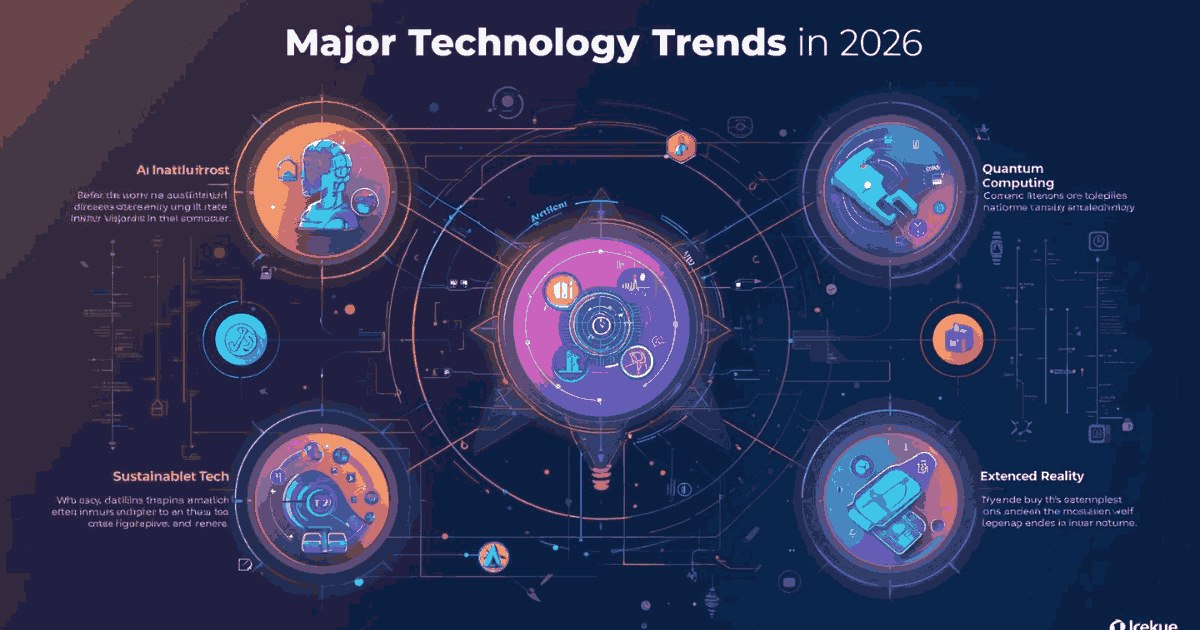
Introduction to 2026 Tech Trends
In 2026, major technology trends in AI and cloud computing are no longer optional for businesses. Organizations that fail to adapt risk falling behind competitors who embrace intelligent systems. How automation is changing modern software development is especially evident in industries that rely on speed and accuracy. Companies now combine cloud-native architecture best practices for developers with automation to scale operations efficiently.
Businesses today must adopt data-driven decision-making in scalable systems to remain competitive. The evolution of DevOps and AI integration strategies allows teams to deploy software faster while reducing errors. Real-time visibility into operations ensures better choices, faster problem-solving, and lower costs. This year, the convergence of AI, cloud, and automation defines the next generation of business growth.
What “Togtechify” Means and Why It Matters
Togtechify is the integration of AI, cloud computing, automation, and modern software practices into unified systems. It represents a new framework in which cybersecurity and real-time analytics for modern digital businesses are built into operations. This ensures businesses can scale safely while responding to changes instantly.
Companies adopting Togtechify see tangible benefits. Scaling enterprise systems with microservices and APIs becomes simpler, and intelligent infrastructure management for digital products ensures reliability. Togtechify isn’t just a tech buzzword; it is a practical method for optimizing AI-assisted monitoring and predictive maintenance tools, giving businesses a measurable advantage in efficiency and innovation.
Core Themes Driving Technology Trends
The first major theme is AI-first development. Businesses now rely on best practices for integrating automation in software pipelines to reduce repetitive work. Teams combine AI models with cloud-native architecture best practices to help developers create smarter, faster systems. Automation allows predictive maintenance, continuous testing, and performance monitoring.
The second theme focuses on data and infrastructure. Modular tools for small and medium development teams help teams adopt scalable strategies. Embedding security in development and operations workflows ensures every system is compliant. Businesses that integrate AI, cloud, and data effectively build a future-ready architecture for AI-driven organizations, positioning them for change in 2026 and beyond.
Impact on Businesses and Leadership
Technology trends are reshaping business leadership. Executives now use cloud, AI, and data engineering to drive business growth and guide decision-making. How to implement AI in modern business systems helps leaders identify opportunities and risks. Departments like HR, finance, and operations benefit from real-time analytics, which helps decision-making in enterprises and enables faster adaptation to market shifts.
Teams also face cultural change. How small teams can adopt modern tech trends ensures they are not left behind. Leaders must balance innovation with security by applying zero trust principles to secure digital products. Organizations that embrace these shifts simultaneously improve productivity, employee satisfaction, and customer trust.
Best Practices for Implementing These Trends
Businesses must adopt what are best practices for AI-driven software development to ensure reliable outcomes. Automation pipelines should include monitoring, testing, and analytics to support the integration of AI and cloud computing into production systems. Security, scalability, and performance must be embedded early in every project.
Development teams should combine cloud-native architecture best practices for developers with modular, reusable components. Using future-ready architecture for AI-driven organizations ensures systems can handle growth. Predictive tools, real-time dashboards, and AI-assisted workflows minimize human error while accelerating delivery.
Common Mistakes to Avoid
A common error is overengineering or ignoring small inefficiencies when adopting automation trends. Teams sometimes neglect how predictive monitoring improves system reliability, leading to downtime or wasted resources.
Another frequent mistake is relying on poor data engineering to support AI-driven business decisions. Without clean, structured data, AI systems cannot perform well. Leaders must also ensure that security is embedded from day one to avoid vulnerabilities and compliance risks. Awareness of these mistakes is critical for sustainable technology adoption.
Tools & Techniques Supporting Tech Trends

Modern tools are essential. Infrastructure platforms and cloud services support the scalability of cloud-native architecture. AI tools analyze customer behavior, predict trends, and assist developers in creating better software. The evolution of DevOps and AI integration strategies enables continuous deployment with fewer errors.
Future-proofing digital systems with modern tech stacks requires combining AI, cloud, and automation. Teams adopt intelligent infrastructure management for digital products and real-time monitoring. Modular platforms help small and medium teams scale rapidly, ensuring consistent delivery across projects and business units.
Comparing Traditional vs Modern Tech Stacks
Traditional stacks rely on static infrastructure, manual testing, and reactive problem-solving. Modern stacks integrate automation in software pipelines, predictive analytics, and AI monitoring. Teams now leverage AI to implement modern business systems, cloud elasticity, and microservices to improve scalability and agility.
In a table comparison:
| Feature | Traditional Stack | Modern Stack (Togtechify) |
|---|---|---|
| Deployment | Manual | Automated & CI/CD pipelines |
| Monitoring | Reactive | Predictive & AI-assisted |
| Infrastructure | Static servers | Cloud-native & edge-enabled |
| Security | Perimeter-focused | Zero-trust & embedded |
| Team Collaboration | Siloed | Cross-functional & modular |
Actionable Checklist for Developers & Business Leaders
Developers must start by assessing how to apply Togtechify trends to their current architecture. They should migrate monolithic apps to microservices, integrate CI/CD pipelines, and automate testing. Leaders need to encourage data-driven insights and embed security early.
Teams should monitor performance using AI-assisted monitoring and predictive maintenance tools. Automating repeatable tasks frees up time for innovation. Following these steps ensures businesses are aligned with the need to adopt cloud-native and automated systems, keeping them scalable and future-proof.
Future Outlook & Predictions
The next five years will see major technology trends in AI and cloud computing become even more embedded in business operations. Companies will rely on autonomous systems, hyper-personalized customer experiences, and AI-driven compliance tools. Future-proofing digital systems with modern tech stacks will be essential for staying competitive.
Edge computing, quantum-ready security, and integrated AI will dominate the landscape. Organizations that invest in intelligent infrastructure management for digital products today will be the leaders of 2026. Adaptation, training, and proactive monitoring will determine success.
Conclusion
In conclusion, major technology trends in 2026: how AI, cloud & automation are reshaping business define the future of digital operations. Companies adopting these trends will gain efficiency, agility, and security. By integrating cloud-native architecture best practices for developers, AI-driven workflows, and automation pipelines, businesses can scale intelligently and remain competitive well into the next decade.
FAQs (Snippet-Friendly)
What are the major technology trends for 2026?
Major technology trends in 2026 include AI-driven systems, cloud-native architecture, automation, real-time analytics, and zero-trust security. Businesses must adopt these to remain competitive.
What are the 4 trends in ICT?
The four key ICT trends are AI integration, cloud computing, cybersecurity frameworks, and automation-driven DevOps pipelines.
What are the trends in technology transfer?
Technology transfer trends focus on cloud-enabled solutions, data-driven insights, automation, and cross-industry adoption of AI and analytics.
Which tools are essential for modern tech stacks?
Tools include cloud platforms, container orchestration, AI frameworks, CI/CD automation pipelines, and data observability solutions.
What are the current trends in technology?
Current trends emphasize AI-assisted monitoring, predictive analytics, cloud scalability, automation in software pipelines, and embedding security into development workflows.
What are the 10 modern technologies?
Ten technologies shaping 2026 include AI, machine learning, cloud-native architecture, DevOps, edge computing, real-time analytics, automation, cybersecurity platforms, IoT integration, and quantum-ready frameworks.
