

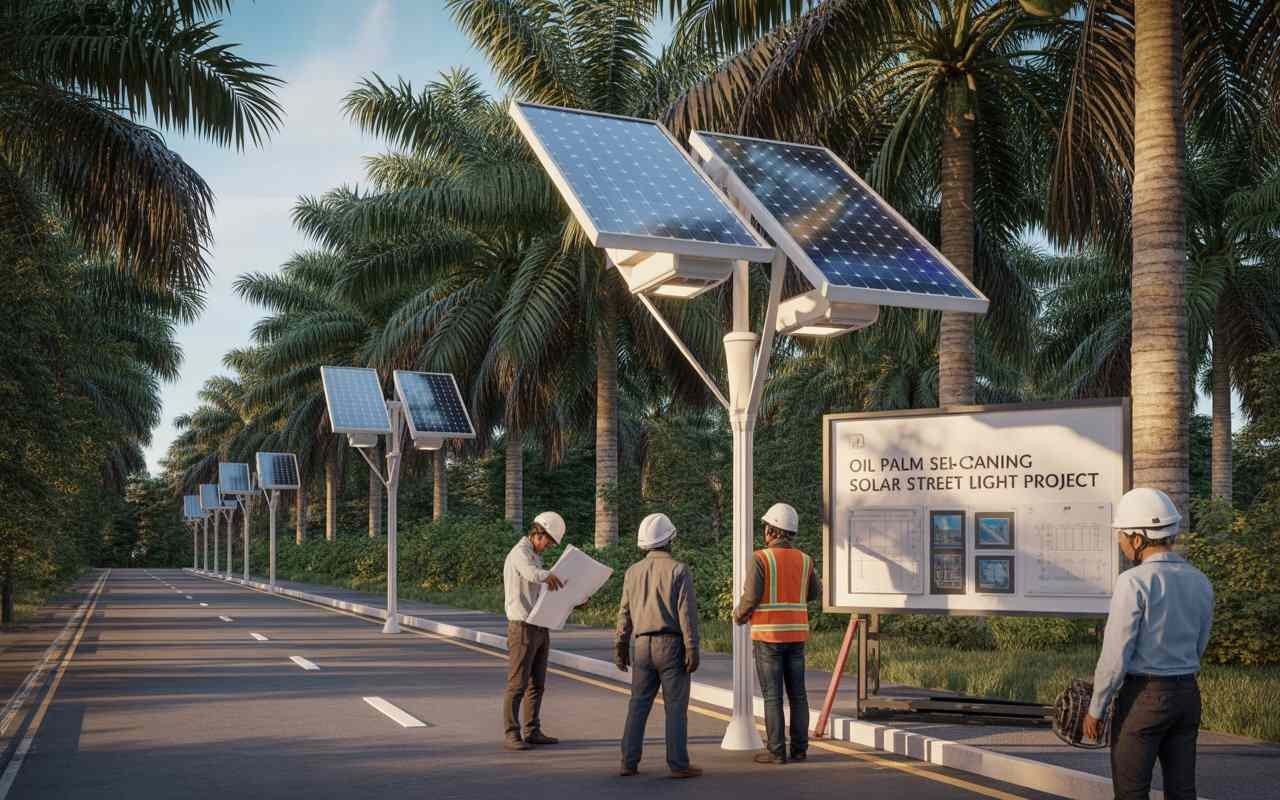
Introduction to the Oil Palm Self-Cleaning Street Light Innovation
In tropical regions, solar street lights often fail due to dust, humidity, and organic residues. The Oil Palm Self-Cleaning Solar Street Light System is changing that. It is designed to operate efficiently in challenging climates. This project brings automated solar panel cleaning technology for plantations to the forefront of renewable energy. It ensures reliable energy and safe streets. Communities no longer face flickering lights or high maintenance costs.
This innovation combines smart engineering with renewable energy principles. Integrating self-cleaning solar street lights in tropical regions helps keep panels clean and batteries fully charged. Local governments and plantation owners can now rely on lights that work continuously. The technology also promotes energy efficiency, safety, and environmental benefits. Roads, villages, and plantations can finally have bright nights without constant maintenance.
What Makes This Project Unique? Core Concept Explained
The Oil Palm Self-Cleaning Solar Street Light Project is unique because it combines robotic brush cleaning systems with smart batteries and sensors. Unlike standard lights, this system automatically detects dirt. The brushes clean panels without human intervention. It also uses LiFePO4 battery solar street light for humid climates, which lasts longer in tropical heat. Efficiency stays high even in challenging weather.
This project goes beyond energy. It creates sustainable lighting infrastructure for rural plantations and off-grid communities. By integrating AI sensors, panels can self-regulate energy usage. These smart solar street lights for high-humidity areas reduce maintenance needs and extend battery life. Compared to traditional systems, this project ensures a long-term, low-cost, and environmentally friendly solution.
How the Self-Cleaning Solar Technology Actually Works

Cleaning is performed with a robotic brush system for solar street lights, which removes dust, oil residue, and pollen. Sensors detect dirt on the panel and automatically trigger the brush. Panels also feature nano-coated surfaces for self-cleaning, allowing water and oil to slide off naturally. This combination keeps the solar panels at peak efficiency year-round.
The system uses a high-efficiency monocrystalline solar street light design, ensuring maximum energy absorption. Panels connect to LiFePO4 batteries, which store enough power for cloudy days. The cleaning mechanism is energy-efficient and runs on a small fraction of the battery. This design explains how self-cleaning solar street lights work in dusty areas and eliminates downtime from manual cleaning.
Using Palm Oil Waste for Renewable Energy Solutions
Palm oil production generates by-products that can be turned into energy. Using this waste makes solar street lighting solutions for the palm oil industry even more sustainable. It reduces carbon emissions and promotes circular energy use. This approach provides renewable energy-powered street lighting for remote roads, reducing reliance on the grid.
By converting waste into energy, the project also supports local communities. This eco-friendly street lighting option for remote communities reduces electricity costs and provides clean power in rural areas. The synergy between energy from palm oil waste and self-cleaning solar panels ensures that sustainability and efficiency go hand in hand.
Key Components and Design Architecture of the System
The system has four main components: solar panels, batteries, cleaning brushes, and housing. The anti-dust solar panels for agricultural environments use a high-efficiency monocrystalline solar street light design. They are protected by corrosion-resistant solar lighting systems for coastal regions. The LiFePO4 battery-powered solar street light for humid climates stores enough energy to power through cloudy or rainy days.
| Component | Function | Feature |
|---|---|---|
| Solar Panel | Converts sunlight | Nano-coated, anti-dust |
| Battery | Stores energy | LiFePO4, high heat resistance |
| Cleaning Brush | Removes dirt | Robotic, sensor-driven |
| Housing | Protects components | Corrosion-resistant, waterproof |
The entire system can operate independently in remote areas. It is a complete off-grid solar street light solution for rural areas.
Why Conventional Solar Street Lights Fail in Tropical Regions
Traditional solar panels often lose power due to dust, humidity, and organic debris. On plantations, dust mixes with moisture to form a sticky layer that blocks sunlight. Regular cleaning is labor-intensive and costly. This shows why solar street lights fail in tropical climates.
The self-cleaning system fixes this problem. Maintenance-free solar lighting for dusty environments helps keep the panels clean. The automated brushes, combined with nano-coated solar panels for self-cleaning applications, maintain high efficiency. Even heavy rain or storms do not significantly reduce output, unlike standard lights.
Economic Advantages: Lower Costs, Higher Efficiency
Manual cleaning of solar lights costs hundreds per pole annually. The cost savings of automated solar street light maintenance are significant. Automated cleaning reduces labor, fuel, and equipment expenses. Batteries last longer because they are not constantly drained, improving ROI.
Investing in self-cleaning solar street lights for tropical regions pays off in a few years. Cities and plantations benefit from high-efficiency monocrystalline solar street-light designs, lower maintenance costs, and consistent performance. This answers the question of whether self-cleaning solar street lights are worth the investment for long-term savings.
Environmental Benefits and Carbon Reduction Impact

Using renewable energy reduces reliance on diesel generators or coal-powered grids. Each light replaces a potential source of emissions, contributing to sustainable street lighting without grid electricity. Materials such as aluminum and LiFePO4 batteries are recyclable, further reducing environmental impact.
The lights minimize light pollution and protect local wildlife by focusing light on roads. Using smart solar street lights with IoT monitoring features allows communities to save energy while reducing carbon emissions. The project promotes eco-friendly growth and sustainable urban planning.
Installation Process and Large-Scale Deployment Potential
The system is plug-and-play. Installing a unit takes less than 20 minutes. Roads, highways, and rural plantations can quickly be equipped with off-grid solar street-light solutions. Wireless mesh networks enable remote monitoring of thousands of lights.
This design ensures the installation process of all-in-one solar street lights is simple. Cities and rural communities can scale up rapidly. The system’s flexibility allows different pole heights, cleaning cycles, and energy capacities to be tailored to each location.
Performance in Humid, Dusty, and Rainy Conditions
The system has an IP67 waterproof rating. Humidity, rain, and dust do not affect performance. Brushes resist mold and mildew, keeping panels clean. Batteries remain stable in heat, providing continuous lighting. This answers how to keep solar street lights working in the rainy season.
Even in extreme weather, LiFePO4 battery-powered solar street lights for humid climates maintain efficiency. Panels remain dust-free with robotic brush cleaning systems for solar street lights. Roads stay bright, ensuring safety for all users.
Smart Features: AI, Sensors, and IoT Integration

AI controls energy usage, cleaning cycles, and dimming based on weather and traffic. Sensors detect dirt on the panel and trigger automatic cleaning. IoT connectivity allows remote monitoring and predictive maintenance. This explains the future of AI-powered solar street lighting systems in modern infrastructure.
The lights can also gather traffic and air quality data, acting as smart city nodes. Smart solar street lights for high-humidity areas improve energy efficiency and safety, while communities gain reliable lighting and intelligent infrastructure.
Public Safety and Security Improvements
Reliable lighting reduces accidents and prevents crime. Bright, focused LEDs illuminate roads for drivers and pedestrians. This demonstrates how autonomous solar lighting improves road safety in plantations and remote areas. Maintenance workers stay safe because no manual cleaning is needed.
Even wildlife benefits from precision lighting, which helps prevent collisions. Roads and villages become safer, boosting economic activity after dark. The benefits of self-cleaning solar lights for rural roads extend beyond energy savings to real improvements in human safety.
Applications in Cities, Highways, and Rural Areas
These lights work in urban neighborhoods, on highways, and in plantations. Solar street lighting solutions for the palm oil industry are easily adaptable to US conditions. Pole heights, wattages, and cleaning frequency can be adjusted per location.
The flexibility ensures communities of all sizes get bright, safe roads. Renewable energy street lighting for remote roads guarantees off-grid energy availability and long-term sustainability.
Challenges, Limitations, and Practical Considerations
The upfront cost is higher than for conventional lights, but the ROI is faster due to maintenance savings. Some areas may require permits or local adjustments. Brush replacements and battery checks are minimal but necessary.
Despite the challenges, the best solar street lighting solution for palm oil plantations remains cost-effective. Thoughtful planning ensures longevity, durability, and minimal downtime.
Future Scope of Self-Cleaning Solar Lighting Projects
The next phase includes AI-driven energy management and IoT-enabled monitoring. Smart lights could also provide traffic and environmental data. The future of AI-powered solar street lighting systems will transform urban planning and plantation safety.
Integrating eco-friendly street lighting options in remote communities supports sustainable growth. Lessons from this system can improve solar street lights worldwide.
Global Importance and Why Developed Countries Are Interested
The USA studies these lights for dust-heavy agricultural regions. If a system works in tropical plantations, it can work anywhere. The project teaches efficiency, durability, and low-maintenance design, crucial for modern cities.
Sustainable street lighting without grid electricity is a global goal. Developed countries see this project as a blueprint for smart, renewable, and self-sufficient infrastructure.
Conclusion: The Future of Sustainable Street Lighting
The Oil Palm Self-Cleaning Solar Street Light Project is a model for smart, sustainable, and low-maintenance lighting. Combining robotic brush cleaning systems for solar street lights with durable LiFePO4 batteries ensures reliable performance even in challenging conditions.
Communities gain safer roads, reduced costs, and cleaner energy. The project proves renewable energy can be practical, efficient, and smart. For cities, highways, and rural areas, it represents the future of street lighting in the USA and beyond.
Frequently Asked Questions (FAQs)
How does the automatic cleaning system operate?
The system uses robotic brush cleaning for solar street lights and nano-coated solar panels for self-cleaning. Sensors detect dirt and automatically activate the brush.
Can the system work during long rainy seasons?
Yes, thanks to the LiFePO4 battery solar street light for humid climates. Panels remain efficient, and energy storage covers multiple cloudy or rainy days.
Is palm oil waste a reliable energy source?
Yes. Solar street lighting solutions for palm oil industries, combined with waste energy, reduce carbon emissions and promote sustainability.
What maintenance is required over time?
Minimal maintenance is needed. Brushes last for years, batteries require occasional checks, and IoT monitoring handles performance tracking.
Is the project cost-effective for developing countries?
Yes. The initial investment is offset by cost savings from automated solar street-light maintenance and extended battery and panel life.
Can this technology be used in smart city projects?
Absolutely. Smart solar street lights with IoT monitoring features allow AI-based energy management, traffic monitoring, and environmental sensing.
