

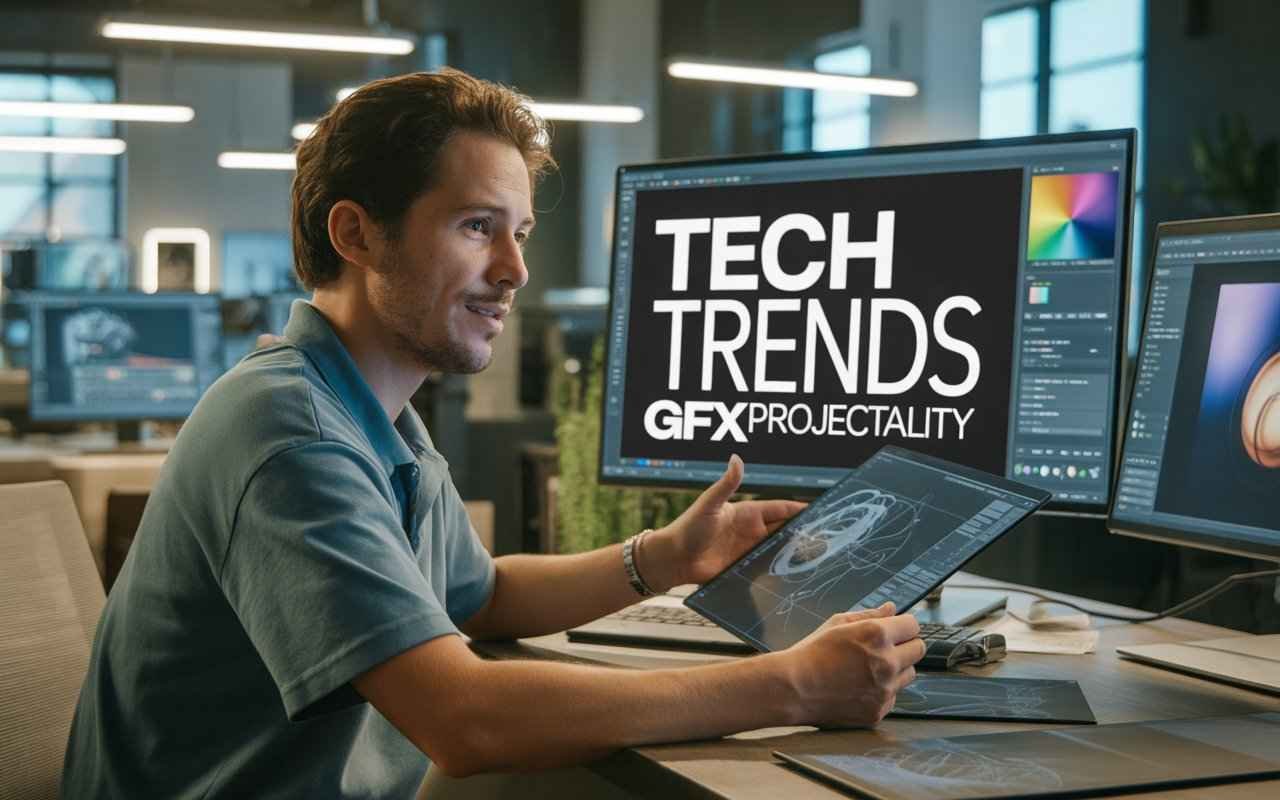
The digital world evolves quickly. Yesterday’s breakthrough becomes today’s routine. In that shifting environment, the tech trend of gfxprojectality has started attracting attention from designers, businesses, and tech thinkers. It reflects the fusion of visual technology, creative automation, and intelligent digital tools.
Simply put, gfxprojectality explains how modern technology communicates through visuals rather than text. Dashboards, animations, interactive interfaces, and AI-generated graphics now shape the way people learn, work, and make decisions. You already experience it every day.
A marketing dashboard showing animated charts. A training simulation inside virtual reality. Even a smart design tool automatically suggests layouts. These examples highlight how technology now speaks a visual language.
Understanding tech trends, gfxprojectality helps you anticipate where digital experiences are heading. Businesses that recognize this shift early adapt faster, communicate better, and innovate more confidently.
Understanding the Meaning of Tech Trends GFXProjectality
At its core, tech trends gfxprojectality describes the convergence of creative graphics, automation, and emerging digital tools. It’s not a single software product. Instead, it represents a mindset where digital visuals, design intelligence, and AI-assisted creativity shape the future of communication.
Think about how quickly visual content dominates online platforms. Infographics explain complex data. Animated interfaces guide users through applications. Even productivity dashboards rely on visual indicators rather than plain numbers.
This transformation exists because humans process images faster than written information. Researchers from the MIT Brain and Cognitive Sciences department report that the brain can recognize images in just 13 milliseconds.
Source: https://news.mit.edu/2014/in-the-blink-of-an-eye-0116
That simple fact explains why visuals now dominate digital environments.
Another factor driving tech trends, gfxprojectality, is automation. Artificial intelligence helps generate designs, enhance images, and predict visual preferences. Tools such as Adobe Firefly or Canva AI demonstrate how creative production is becoming partially automated.
As a result, designers and businesses spend less time on manual tasks. They focus more on ideas, storytelling, and strategy.
Why Tech Trends GFXProjectality Matters in the Modern Digital World
Digital communication has shifted dramatically over the last decade. People scroll quickly. They skim content instead of reading every sentence. In such an environment, visuals act like magnets for attention.
This change explains the importance of tech trends, gfxprojectality. Visual systems help businesses deliver information faster and more clearly.
Imagine opening a business analytics report. Would you rather read ten pages of text or explore an interactive dashboard with graphs and icons? Most people prefer the second option.
That preference influences every digital industry.
Marketing teams design animated ads. Educators use 3D models to explain scientific concepts. HR departments build visual training programs. Healthcare professionals rely on medical imaging and digital simulations.
All these applications illustrate how visuals transform understanding.
Another advantage appears in decision-making. When complex information becomes visual, patterns emerge quickly. Executives see trends instantly instead of interpreting raw numbers.
For example, modern business intelligence dashboards convert large datasets into charts and visual indicators. This visual approach allows faster strategic decisions.
In simple terms, tech trends like gfxprojectality help translate complex technology into intuitive experiences.
Core Principles Behind Tech Trends GFXProjectality
Several principles explain why this technological concept continues to gain popularity.
Visual Communication Is Becoming Universal
Humans naturally respond to images. A single illustration can convey an idea that might require paragraphs of explanation. Because of that, companies invest heavily in visual storytelling and graphic communication.
Design elements such as icons, animations, and color patterns guide users through digital products effortlessly.
Artificial Intelligence Supports Creative Work
Contrary to popular fear, AI doesn’t replace designers. Instead, it assists them. AI tools suggest layouts, generate illustrations, and automatically adjust colors. Designers still control the creative vision.
This partnership between human imagination and algorithmic assistance strengthens the tech trend of gfxprojectality.
Technology Evolves Constantly
Innovation rarely slows down. New software updates appear every month. Creative platforms continuously refine design workflows. Real-time rendering, interactive dashboards, and AI design assistants represent only a few examples.
Adapting quickly becomes essential.
Human Experience Comes First
Despite advanced technology, users still expect simplicity. Interfaces must remain intuitive. Visual complexity should never confuse people.
Therefore, designers prioritize usability and clarity when implementing gfxprojectality principles.
Industries Influenced by Tech Trends GFXProjectality

The impact of tech trends gfxprojectality extends across multiple sectors. Each industry applies visual technology differently.
Human Resources
HR departments increasingly rely on visual learning systems. Training modules include interactive simulations and gamified onboarding experiences.
For instance, virtual training environments simulate workplace scenarios. Employees practice tasks safely before applying them in real situations.
Marketing and Branding
Marketing teams use motion graphics, dynamic advertisements, and AI-generated visuals to capture audience attention.
Modern campaigns often rely on data-driven design decisions. Visual analytics reveal which graphics resonate most with audiences.
Education
Students absorb information more effectively when lessons include diagrams and animations. Virtual laboratories allow learners to explore scientific concepts through interactive models.
This approach enhances engagement and improves comprehension.
Healthcare
Medical professionals depend on advanced imaging tools, 3D anatomy models, and digital diagnostics. These visual technologies help doctors identify patterns that may remain hidden in text-based reports.
Gaming and Entertainment
Perhaps the most obvious example appears in gaming. The gaming industry constantly pushes boundaries in 3D rendering, realistic animation, and immersive storytelling.
Many innovations in gfxprojectality originate from gaming technology before spreading to other industries.
Challenges Associated with GFXProjectality Adoption
While the benefits are significant, adopting these technologies presents several challenges.
First, technological tools evolve rapidly. Companies must update software regularly to remain competitive. Outdated platforms can limit creative potential.
Second, skill gaps may slow adoption. Employees require training to understand modern visual tools and AI-assisted platforms.
Third, advanced graphics systems often demand powerful hardware. Smaller organizations sometimes struggle with infrastructure costs.
Finally, data privacy becomes crucial. Visual platforms frequently integrate multiple digital services. Protecting sensitive information requires strong security protocols.
However, organizations that overcome these barriers often gain substantial competitive advantages.
Future Predictions for Tech Trends GFXProjectality
The future of tech trends gfxprojectality looks incredibly dynamic. Several emerging developments may redefine digital experiences in the coming years.
One major shift involves fully AI-generated design systems. Designers may simply describe ideas through prompts while AI generates layouts automatically.
Another development involves personalized interfaces. Websites could adjust colors, typography, and graphics according to individual preferences.
Virtual reality and augmented reality may also become mainstream. People might attend meetings in immersive digital spaces or visualize products before purchasing them.
Even emotional design could evolve. Future systems might analyze user reactions to visuals and adjust designs accordingly.
These possibilities highlight how visuals will continue shaping technological interaction.
How Businesses and Individuals Benefit from GFXProjectality
Understanding tech trends gfxprojectality offers multiple advantages for professionals and organizations.
Creative teams produce high-quality visuals faster. Automation reduces repetitive tasks, allowing designers to focus on strategic ideas.
Businesses improve user experiences through intuitive visual interfaces. Customers navigate websites easily when information appears visually organized.
Entrepreneurs also gain a competitive edge. Clear graphics communicate value faster than lengthy explanations.
Students benefit as well. Visual learning tools help them grasp complex subjects quickly.
In many ways, gfxprojectality democratizes creativity. Individuals without traditional design skills can still produce professional visuals using intelligent software.
Practical Tools Supporting GFXProjectality
Many modern platforms already demonstrate this technological shift.
| Tool | Purpose | Key Feature |
|---|---|---|
| Canva AI | Visual design | AI-assisted graphics |
| Adobe Firefly | Image generation | Prompt-based visuals |
| Tableau | Data visualization | Interactive dashboards |
| Unreal Engine | Real-time rendering | 3D environments |
These tools illustrate how creative technology becomes increasingly accessible.
Conclusion
Technology rarely evolves in isolation. Instead, innovation emerges when multiple disciplines intersect. Tech trends gfxprojectality represents that intersection between creativity, automation, and digital intelligence.
Visual communication now drives modern experiences. From marketing campaigns to corporate dashboards, graphics shape how people understand information.
Organizations that embrace this shift gain a clear advantage. They communicate faster, innovate more effectively, and connect with audiences through intuitive visual systems.
The digital future will likely become even more immersive, interactive, and visually driven. Those who understand gfxprojectality today will be better prepared for tomorrow’s technological landscape.
